
Rising Electricity Bills and Server Rooms
Like many businesses across the UK, we recently received an email titled: “Important update: additional non-energy costs on your bill.”
It raised a question many organisations will now be asking: what are these additional costs, and what do they mean for businesses already managing high electricity usage?
One of the charges being introduced is the Nuclear RAB levy. This is a charge used to help fund new UK nuclear infrastructure under the Regulated Asset Base model. The current designated project is Sizewell C, and the levy is charged to electricity suppliers, who can then recover the cost through customer bills.
For the period 1 July to 30 September 2026, the Nuclear RAB Interim Levy Rate has been confirmed at £4.488/MWh. In simpler terms, that equals approximately £0.004488/kWh.
For many businesses, that may not sound like much. But for organisations running their own server rooms, comms rooms or data cabinets, even small increases are worth understanding.



What does this mean for a server room?
Let’s take a simple example.
A medium-sized business running two to three server cabinets may have each cabinet using around 5kW on average. That includes a mix of servers, storage, networking and firewall equipment.
Using an electricity rate of £0.22/kWh, the calculation looks like this:
5kW × 24 hours × 365 days × £0.22/kWh = approximately £9,636 per year, per cabinet
That means:
Setup | Estimated annual electricity cost |
|---|---|
1 cabinet | £9,636 |
2 cabinets | £19,272 |
3 cabinets | £28,908 |
These figures are only an example, as actual costs will depend on the equipment, load, electricity contract and how the room is cooled. But they show how quickly the cost of running infrastructure can add up.
What does this mean for a server room?
Let’s take a simple example.
A medium-sized business running two to three server cabinets may have each cabinet using around 5kW on average. That includes a mix of servers, storage, networking and firewall equipment.
Using an electricity rate of £0.22/kWh, the calculation looks like this:
5kW × 24 hours × 365 days × £0.22/kWh = approximately £9,636 per year, per cabinet
That means:
Setup | Estimated annual electricity cost |
|---|---|
1 cabinet | £9,636 |
2 cabinets | £19,272 |
3 cabinets | £28,908 |
These figures are only an example, as actual costs will depend on the equipment, load, electricity contract and how the room is cooled. But they show how quickly the cost of running infrastructure can add up.
How much could the Nuclear RAB levy add?
Using the same example, the levy alone would add:
Setup | Additional annual cost from Nuclear RAB levy |
|---|---|
1 cabinet | £196.57 |
2 cabinets | £393.15 |
3 cabinets | £589.72 |
So, the Nuclear RAB levy is not the largest part of the bill.
But it is another reminder that running ageing infrastructure is expensive, especially when electricity costs remain difficult to predict and additional non-energy charges continue to appear on bills.
The bigger issue: inefficient infrastructure
For many businesses, the bigger opportunity is not simply understanding the levy. It is understanding how efficiently the server room is using the electricity already being paid for.
Older infrastructure, redundant hardware, overloaded cabinets, poor rack layouts and cooling inefficiencies can all increase running costs.
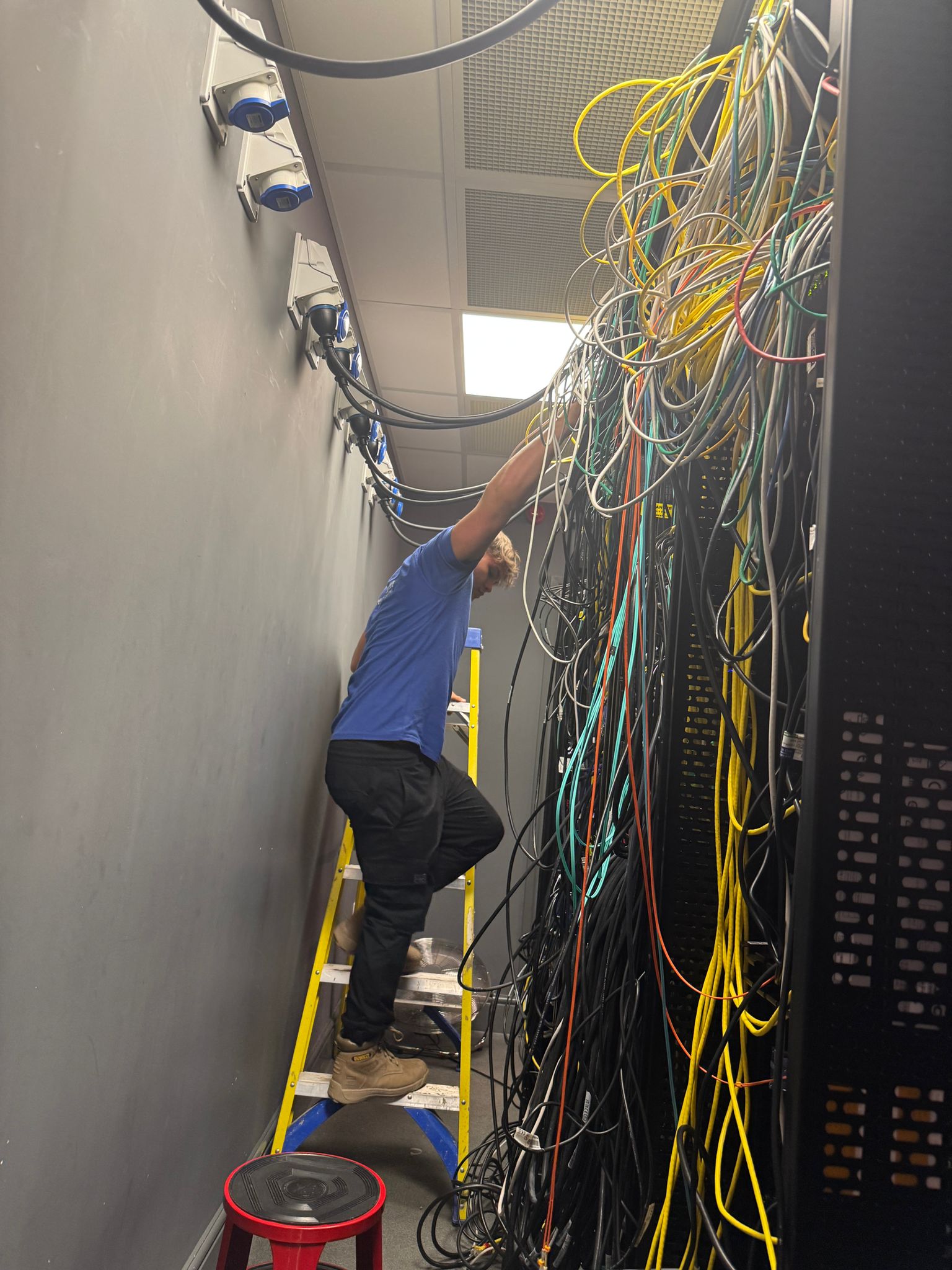
Cabling is part of this too.
To be clear, cabling alone is not usually the main problem. Simply tidying cables will not suddenly reduce a server room’s electricity bill by 20%.
However, poor cable management is one visible issue that can often be fixed. Congested cabling can obstruct airflow, create hot spots and make cooling systems work harder. Energy efficiency guidance for data centres recommends having a cable management strategy across the full cooling airflow path, including rack intake and discharge areas, because cable obstruction can affect cooling performance.
How much could the Nuclear RAB levy add?
Using the same example, the levy alone would add:
Setup | Additional annual cost from Nuclear RAB levy |
|---|---|
1 cabinet | £196.57 |
2 cabinets | £393.15 |
3 cabinets | £589.72 |
So, the Nuclear RAB levy is not the largest part of the bill.
But it is another reminder that running ageing infrastructure is expensive, especially when electricity costs remain difficult to predict and additional non-energy charges continue to appear on bills.
The bigger issue: inefficient infrastructure
For many businesses, the bigger opportunity is not simply understanding the levy. It is understanding how efficiently the server room is using the electricity already being paid for.
Older infrastructure, redundant hardware, overloaded cabinets, poor rack layouts and cooling inefficiencies can all increase running costs.
Cabling is part of this too.
To be clear, cabling alone is not usually the main problem. Simply tidying cables will not suddenly reduce a server room’s electricity bill by 20%.
However, poor cable management is one visible issue that can often be fixed. Congested cabling can obstruct airflow, create hot spots and make cooling systems work harder. Energy efficiency guidance for data centres recommends having a cable management strategy across the full cooling airflow path, including rack intake and discharge areas, because cable obstruction can affect cooling performance.
Even small savings can be worth reviewing
If a two-cabinet setup costs around £19,272 per year to run, even a small improvement can make a difference.
Setup | 5% saving | 10% saving |
|---|---|---|
2 cabinets | £963.60 per year | £1,927.20 per year |
3 cabinets | £1,445.40 per year | £2,890.80 per year |
This is why a server room refresh should not only be seen as a technical exercise. It can also be a practical cost-control exercise.
The aim is not always to replace everything. In many cases, the first step is understanding what is there, what is still needed, what is inefficient, and what could be improved.
What should businesses review?
A server room review can help identify:
redundant or ageing equipment
inefficient rack layouts
poor airflow paths
congested or unmanaged cabling
blocked intake or exhaust areas
cooling pressure points
hardware that could be consolidated
risks caused by years of small changes without a wider plan
For businesses that have had the same server room setup for five, seven or ten years, these issues are common.
Over time, equipment is added, removed, replaced or patched in quickly. What starts as an organised environment can become inefficient, harder to maintain and more expensive to run.
Businesses cannot control every charge, but they can control their infrastructure
The Nuclear RAB levy may only add a few hundred pounds a year to a small server room example.
But it highlights a bigger point.
Businesses cannot control every new charge added to their electricity bill. They cannot control every policy cost, network cost or supplier cost.
But they can control how efficiently their infrastructure uses the electricity they are already paying for.
Even small savings can be worth reviewing
If a two-cabinet setup costs around £19,272 per year to run, even a small improvement can make a difference.
Setup | 5% saving | 10% saving |
|---|---|---|
2 cabinets | £963.60 per year | £1,927.20 per year |
3 cabinets | £1,445.40 per year | £2,890.80 per year |
This is why a server room refresh should not only be seen as a technical exercise. It can also be a practical cost-control exercise.
The aim is not always to replace everything. In many cases, the first step is understanding what is there, what is still needed, what is inefficient, and what could be improved.
What should businesses review?
A server room review can help identify:
redundant or ageing equipment
inefficient rack layouts
poor airflow paths
congested or unmanaged cabling
blocked intake or exhaust areas
cooling pressure points
hardware that could be consolidated
risks caused by years of small changes without a wider plan
For businesses that have had the same server room setup for five, seven or ten years, these issues are common.
Over time, equipment is added, removed, replaced or patched in quickly. What starts as an organised environment can become inefficient, harder to maintain and more expensive to run.
Businesses cannot control every charge, but they can control their infrastructure
The Nuclear RAB levy may only add a few hundred pounds a year to a small server room example.
But it highlights a bigger point.
Businesses cannot control every new charge added to their electricity bill. They cannot control every policy cost, network cost or supplier cost.
But they can control how efficiently their infrastructure uses the electricity they are already paying for.
If your server room, comms room or data cabinets have not been reviewed recently, now is a sensible time to take another look. At Connectium, we help businesses review, refresh and improve critical IT infrastructure. From server room audits and rack planning to cabling, relocations and infrastructure upgrades, we help organisations identify where improvements can be made and where unnecessary risk or waste may be reduced.
More insights
More insights


Ready to talk
about your project?
Whether you know exactly what you need or want to talk it through first, get in touch and we'll respond quickly.
4.9/5
Google Reviews

Services
pages
© 2026 Connectium. All rights reserved.
Ready to talk
about your project?
Whether you know exactly what you need or want to talk it through first, get in touch and we'll respond quickly.
4.9/5
Google Reviews
Services
pages
© 2026 Connectium. All rights reserved.
Ready to talk
about your project?
Whether you know exactly what you need or want to talk it through first, get in touch and we'll respond quickly.
4.9/5
Google Reviews
Services
pages
© 2026 Connectium. All rights reserved.