IT Operations: Why Reliable Infrastructure Starts Behind the Scenes
Every business relies on technology, but the parts that keep everything running are often the parts people rarely see.
Behind the laptops, cloud platforms, phone systems, security tools and business applications, there is a physical infrastructure that needs to be planned, maintained and supported properly. Server rooms, network cabinets, structured cabling, switches, firewalls, storage, power and cooling all play a part in keeping daily operations moving.
When this infrastructure is organised and well managed, it can be easy to forget it is there. When it is not, the impact can be immediate: slow systems, connectivity issues, overheating equipment, failed hardware, downtime and disruption to staff and customers.
That is why IT operations are not just about fixing problems when something goes wrong. They are about creating a reliable environment where technology can support the business every day.
What do IT operations actually cover?
IT operations can include everything from network support and hardware management to server room maintenance, data centre support, cabling, monitoring, security, backup systems and infrastructure planning.
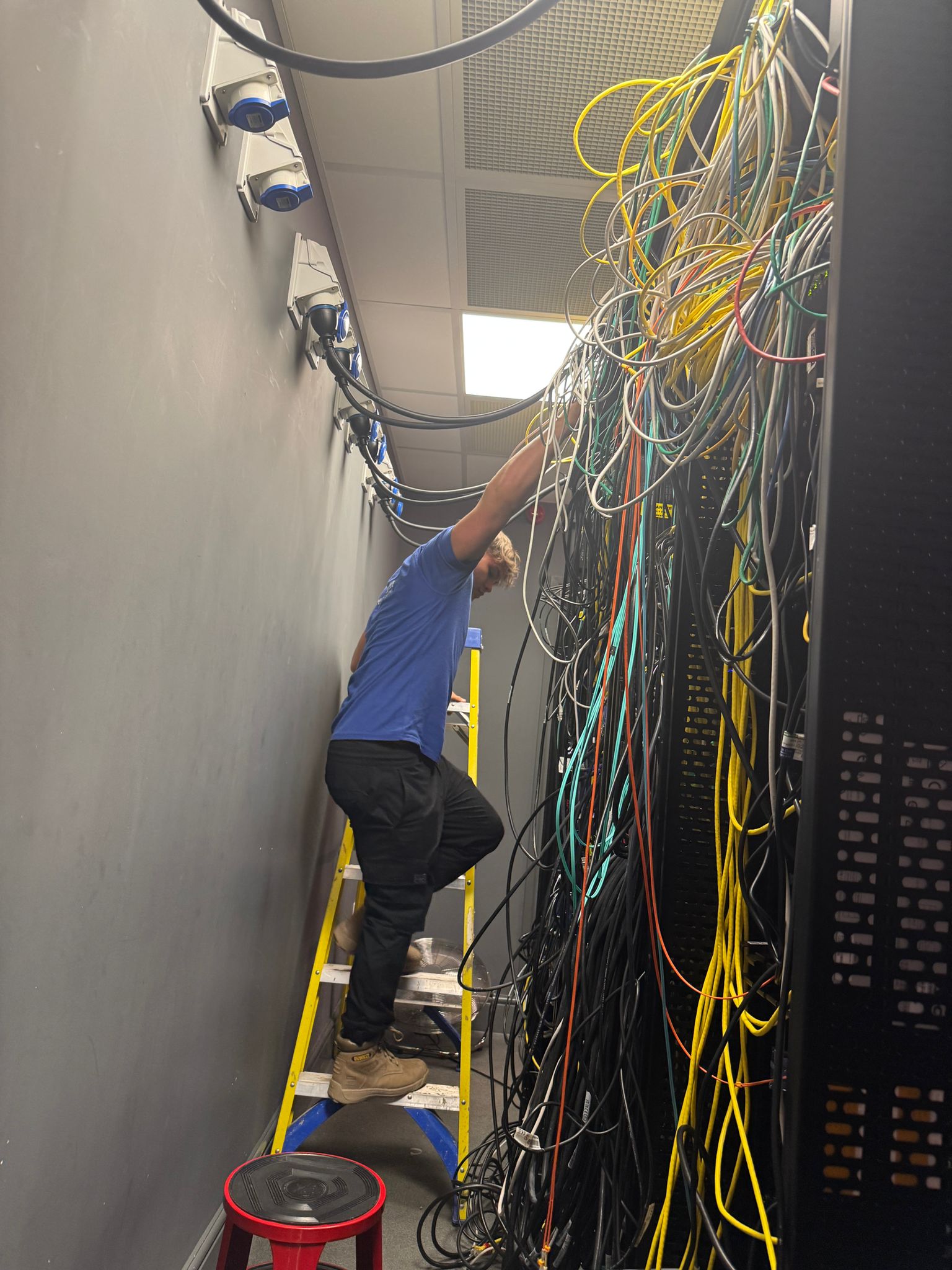
For many organisations, these responsibilities sit quietly in the background. Equipment is added over time. Temporary fixes become permanent. Network cabinets become difficult to manage. Cables are added without being removed. Older devices remain in place because they still appear to be working.
Individually, these issues may seem minor. Over time, they can make the infrastructure harder to support, harder to troubleshoot and more vulnerable to failure. Ageing hardware can also create operational risk, especially when equipment is no longer supported or difficult to replace.
A reliable IT environment depends on more than the equipment itself. It also depends on how that equipment is installed, labelled, powered, cooled, documented and maintained.
Why the physical environment matters
A server room or communications cabinet does not need to be large to be business critical. The UK government recognises data centres as critical digital infrastructure, supported by electricity supply, environmental controls, security and resilience systems. Even a small rack can support internet connectivity, phones, access control, CCTV, Wi-Fi, servers, storage and other essential systems.
If that rack becomes overcrowded, poorly cabled or difficult to access, simple tasks can become unnecessarily risky. Replacing a switch, tracing a connection or identifying a fault can take longer than it should. In a live environment, that can mean more downtime and more disruption.
Good infrastructure planning helps reduce those risks.
Clear labelling, structured cabling, tidy patching, planned containment and proper rack layouts all make IT environments easier to manage. They also make future upgrades, relocations and support work much smoother.
For businesses with ageing server rooms or equipment that has built up over several years, a review of the physical infrastructure can often reveal issues before they become operational problems.
Common signs that IT infrastructure needs attention
There are usually warning signs before a server room or network cabinet becomes a serious problem.
These can include messy or undocumented cabling, equipment that is difficult to access, poor airflow around racks, old or redundant devices still powered on, limited space for future growth, unclear labelling, overloaded cabinets, or repeated connectivity issues that are difficult to trace.
In some cases, the technology may still be working, but the environment around it is making support harder than it needs to be.
This is where proactive IT operations become important. Waiting until something fails can be more expensive and disruptive than reviewing the infrastructure early.
The role of audits, cabling and infrastructure support
An infrastructure audit gives businesses a clearer view of what they have, how it is connected and where potential risks may exist.
This can include reviewing racks, cabinets, cabling, power, patching, labelling, hardware, network layout and the general condition of the server room or data centre environment.
From there, businesses can make better decisions. Some equipment may need to be replaced. Some cabling may need to be reorganised. Some racks may need to be reconfigured. In other cases, redundant hardware can be removed, freeing up space, improving access and reducing unnecessary complexity.
Structured cabling and proper rack management are not just cosmetic improvements. They support reliability, make maintenance easier and help reduce the risk of accidental disconnection or delays during fault finding.
Supporting change without unnecessary disruption
IT environments rarely stay the same for long. Businesses move offices, expand teams, consolidate sites, upgrade systems, refresh hardware and change the way their technology is used.
During these changes, the quality of the existing infrastructure matters.
A well-organised environment is easier to move, upgrade, support and document. A poorly managed one can turn even a simple change into a much larger project.
This is especially important during office moves, data centre relocations, server room upgrades and infrastructure refreshes. Planning, sequencing and clear documentation help reduce disruption and keep critical systems available where possible.
How Connectium supports IT operations
At Connectium, we support businesses with the physical infrastructure that keeps IT operations running.
Our work covers data centre services, IT relocations, server room and comms room cabling, infrastructure audits, smart hands support, equipment moves, rack installations, cable management and ongoing support for critical environments.
We help businesses understand what is in place, identify risks, plan improvements and carry out infrastructure work with care.
Whether it is a small communications cabinet or a larger data centre environment, the goal is the same: to make the infrastructure easier to manage, more reliable and better prepared for future change.
Reliable IT starts behind the scenes
When technology works, most people do not think about the infrastructure behind it. But reliable IT operations depend on what happens behind the scenes.
The cabling, racks, power, cooling, labelling, documentation and support processes all play a part in keeping systems available.
For businesses that depend on their technology every day, reviewing the physical infrastructure is not just an IT task. It is part of protecting business continuity.
If your server room, comms cabinet or data centre environment has grown over time, it may be worth taking a closer look at whether it is still supporting the business in the best way.